
Senior vs Intermediate vs Junior Sticks: A Hockey Stick Sizing Guide by Age
Buying a hockey stick for a growing player can be surprisingly confusing. The shelves are filled with senior, intermediate, junior, and youth models, and the differences are not simply about age. Height, weight, strength, hand size, stick length, and flex all affect how a stick feels and performs on the ice.
That is why choosing player sticks based on age alone is rarely the best approach. A 13-year-old who is tall and strong may need something very different from another player of the same age. The goal is to find a stick that the player can control comfortably and load properly when shooting.
Senior, Intermediate, Junior, or Youth: What Is the Difference?
The four categories are mainly used to describe the general size and construction of a stick. They also tend to come with different flex ranges.
CCM, for example, currently recommends roughly 10–30 flex for youth players, 30–50 for juniors, 50–70 for intermediate players, and 70+ for seniors. These are guidelines rather than strict rules, because players of the same age can have very different builds.
Warrior takes a similar approach, recommending that players consider height and glove fit when choosing between senior, intermediate, junior, and youth sticks. Its current guide also notes that younger players need smaller shaft dimensions and softer flexes so they can actually load the stick.
So, what should you look for at each stage?
Youth Sticks: The Right Starting Point for Young Players
For the youngest hockey players, a youth stick is usually the easiest to handle. These sticks are shorter, lighter, and designed with smaller shaft dimensions. The softer flex is particularly important because children often do not have enough strength to load a stiff shaft properly.
Models such as the Warrior Covert Deluxe Youth Ice Hockey Stick and Warrior Alpha LX3 Pro Youth Ice Hockey Stick are examples of youth-level equipment. When selecting one, focus less on the model name and more on whether the player can grip it comfortably and control the blade without awkward body positioning.
A stick that is too long can make basic skills unnecessarily difficult. Passing, stickhandling, and shooting all require the player to feel where the blade is in relation to their body. A properly sized youth stick gives them a better chance to develop those skills naturally.
Junior Sticks: A Natural Step Up
Junior sticks are intended for players who have outgrown youth equipment but are not ready for a full-size stick. They generally offer a little more length and a higher flex range while retaining a narrower shaft that is easier for smaller hands to manage.
The Warrior Covert Deluxe Junior Ice Hockey Stick is an example of a stick in this category.
This is often the stage where parents make the mistake of buying a senior stick “to grow into.” It may seem economical, but a stick that is too stiff can actually make shooting harder. If a player cannot put enough force into the shaft to make it bend, they are unlikely to get the response the stick was designed to provide.
In other words, bigger does not automatically mean better.
Intermediate Sticks: The Bridge Between Junior and Senior
Intermediate equipment is especially useful for teenagers who have grown beyond junior sizing but are not yet comfortable with a senior shaft and flex.
Bauer’s current product range illustrates the overlap between categories: its sticks can be offered in junior, intermediate, and senior flex options, with intermediate models commonly sitting between junior and senior lengths and flexes.
This makes intermediate sticks a useful choice for players whose height and strength are developing quickly. They can provide additional length without forcing a smaller player to handle a full senior flex.
There is also no reason to rush through this category. If an intermediate stick feels right and the player can shoot, pass, and handle the puck comfortably, there is little benefit in moving to senior equipment simply because of age.
Senior Sticks: For Older and Stronger Players
Senior sticks are generally designed for adult players and physically mature teenagers. They have longer shafts, larger dimensions, and higher flex options than junior equipment.
CCM currently lists senior sticks as 16 years and older as a general age guideline, while also emphasizing that flex selection depends on the individual player.
There is a wide range of senior equipment available. Players might compare the Warrior Alpha LX3 Pro Senior Ice Hockey Stick, CCM Tacks XF Senior Ice Hockey Stick, Bauer Twitch Grip Ice Hockey Stick Senior, CCM Trigger 9 Senior Ice Hockey Stick, Bauer Nexus E40 Grip Senior Ice Hockey Stick, CCM Trigger 9K Senior Ice Hockey Stick or Bauer Proto Grip Gold Senior Ice Hockey Stick.
However, the name printed on the shaft should not determine the size. Even an expensive senior model will feel wrong if the player is not strong enough to load its flex or struggles to control its length.
How Long Should a Hockey Stick Be?
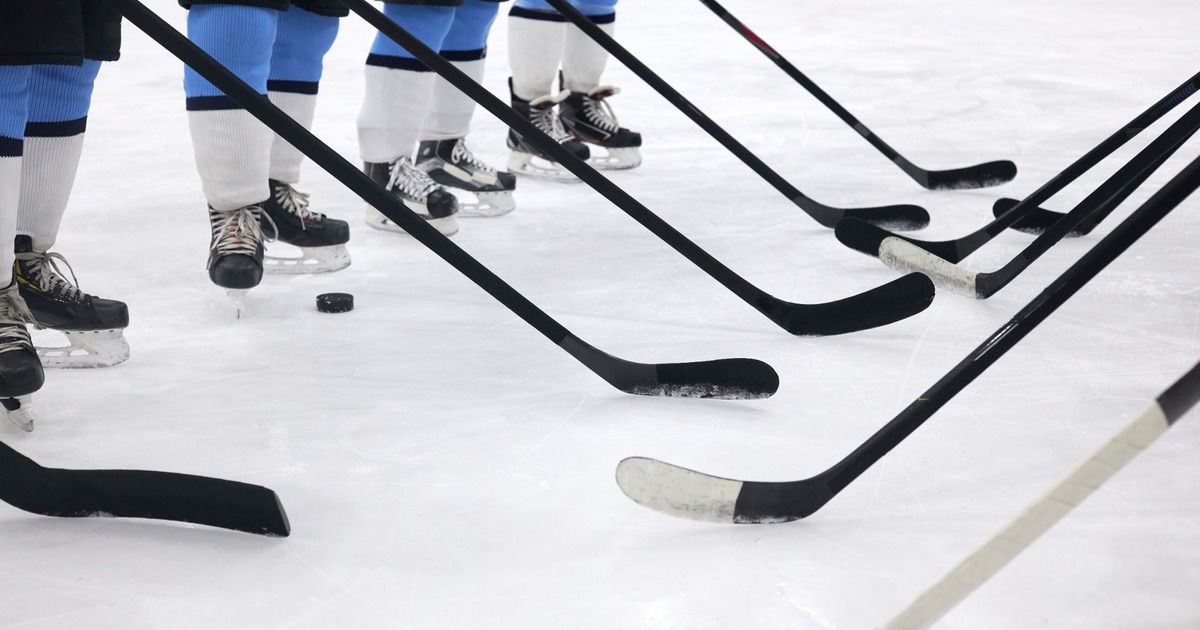
Length is one of the easiest things to check at home. With skates on, stand upright and place the stick vertically in front of you. As a general starting point, the shaft should reach somewhere between the chin and nose. Warrior uses this chin-to-nose guideline in its current stick buying guide.
That does not mean every player should use the same length.
A shorter stick can make stickhandling and close puck control feel easier. A longer stick provides more reach and can be useful for players who value defensive range or additional leverage. Playing position and personal preference therefore matter once the basic fit is established.
If necessary, a stick can be cut down. Keep in mind, though, that shortening a stick increases its effective stiffness.
When Should You Move Up to a Bigger Hockey Stick?
Moving from one stick category to another is a normal part of a hockey player's development, but the timing is different for everyone. Rather than changing equipment simply because a player has reached a certain age, pay attention to how the current stick feels during practices and games.
A player may be ready for senior sticks when their current equipment feels noticeably too short, the shaft is no longer comfortable in their hands, or they can consistently load a stiffer flex without struggling to generate power. Strength and overall body size are usually better indicators than age alone.
For younger players, the same principle applies when moving from youth sticks to junior sticks. If the player has grown significantly and the current stick feels cramped or too short, moving up can improve reach and control. On the other hand, choosing a larger stick before the player is physically ready can make shooting and stickhandling more difficult.
One useful test is to watch the player's shooting technique. If they can bend the shaft naturally and maintain control throughout the shot, the flex is likely within a suitable range. If they struggle to load the shaft or appear to compensate by using excessive upper-body strength, the stick may simply be too stiff.
The transition should also feel comfortable during everyday skills. A player should be able to receive passes, protect the puck, make quick stickhandling movements, and shoot without constantly adjusting their grip or posture.
Choosing the Correct Flex
Flex is simply a measure of how much resistance the shaft provides when it bends. A lower flex number means a softer stick, while a higher number means a stiffer one.
For a young or lightweight player, a softer flex is usually easier to load. As players become heavier and stronger, they can generally handle higher flex ratings. CCM’s current recommendations reflect this progression from youth through junior and intermediate to senior equipment.
There is no single flex that is perfect for every player of a particular age. Shooting technique matters, too. A player who relies heavily on quick wrist shots may prefer a softer feel, while a stronger player who takes powerful shots may prefer more resistance from the shaft. Warrior also recommends starting around half the player’s weight in pounds as a general flex guideline, then adjusting according to strength and playing style.
Don’t Forget Hand Size
One detail that is easy to overlook is shaft diameter. Younger players have smaller hands, so a junior or youth shaft can be much easier to grip than a senior model.
That matters during every part of the game. If the player constantly has to squeeze a shaft that feels too large, they may lose comfort and control. Warrior specifically recommends considering glove fit and shaft dimensions when choosing a stick size.
For this reason, the transition from youth to junior and eventually to intermediate or senior equipment should happen when the player’s body and hands are ready, not simply when they reach a certain birthday.
A Simple Way to Choose
When buying ice hockey sticks, start with the player’s height and hand size. Next, consider weight and strength when selecting flex. Then check the stick length with skates on and make sure the player can comfortably control the blade.
For most children, that means starting with youth equipment and progressing to junior sticks. Teenagers often move into intermediate sizing before eventually using senior sticks. Adults will generally need senior equipment, although smaller adults can sometimes find intermediate options more comfortable.
The best stick is ultimately the one that works with the player’s technique instead of making them compensate for poor sizing. Get the length and flex right first, then worry about kick point, blade pattern, grip, weight, and other performance features.
A correctly sized stick will not magically improve a player’s game, but the wrong one can certainly get in the way. For developing players, that makes proper sizing one of the simplest and most worthwhile equipment decisions they can make.