
How to Choose Hockey Shoulder Pads, Elbow Pads and Shin Guards
Choosing the right protective equipment is one of the most important steps when building a hockey setup. A player needs enough coverage to handle falls, contact, sticks, pucks, and the occasional collision with the boards, but excessive bulk can make skating and stickhandling feel unnecessarily difficult.
The three pieces that deserve particular attention are shoulder pads, elbow pads and shin guards. They protect different parts of the body, but they also need to work together. A good fit keeps the protection in place while allowing you to move naturally throughout a game or practice.
Start With Fit, Not Brand
When shopping for protective gear, it is easy to become focused on brands, model names, or price. Fit should come first. Even an advanced piece of equipment cannot provide its intended protection if it constantly shifts out of position.
Try equipment on while wearing the base layers you normally use for hockey. Move your arms, bend your knees, crouch down, and simulate a skating position. The equipment should remain secure without creating uncomfortable pressure.
Keep in mind that different manufacturers can use different shapes and sizing systems. A medium from one product line may not feel exactly like a medium from another.
Choosing Shoulder Pads
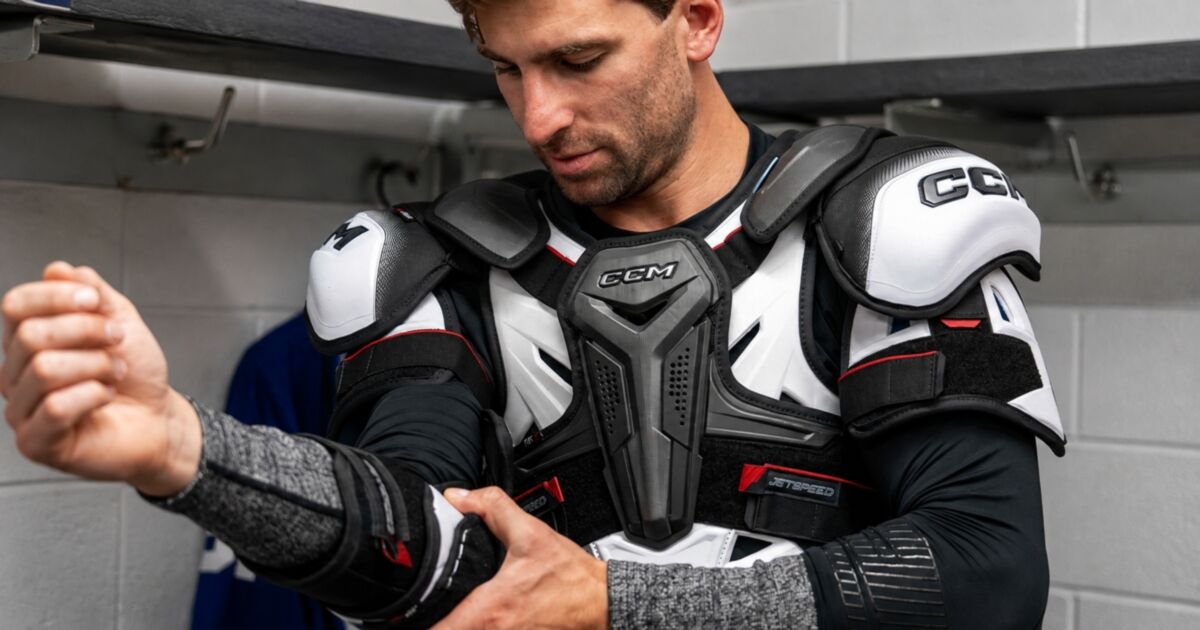
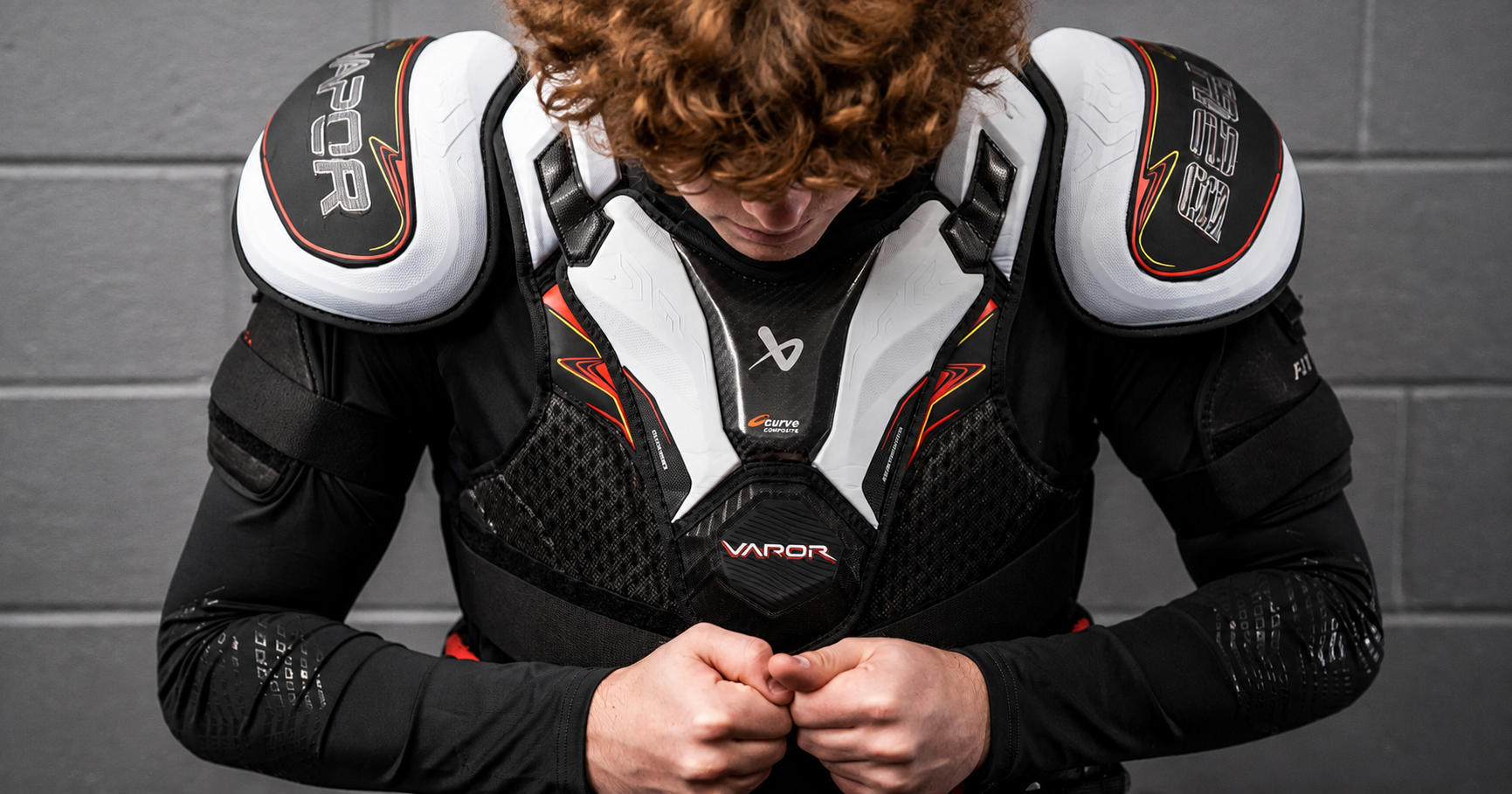
The main purpose of shoulder pads is to protect the shoulders, chest, upper back, and areas around the collarbone. They should sit securely on the shoulders, with the protective caps staying centered when you move your arms.
A good pair of elbow pads should stay securely in place while allowing natural arm movement. For players looking for a comfortable and protective option, the Bauer Supreme Fuse Senior Ice Hockey Elbow Pads are designed to provide reliable coverage without limiting mobility.
The Bauer Vapor Fly40 Senior Ice Hockey Shoulder Pads are one option for senior players comparing different equipment designs. Another model worth considering is the CCM Tacks XF Senior Ice Hockey Shoulder Pads, which is part of CCM’s Tacks equipment family.
When trying shoulder protection, pay attention to how it interacts with the rest of your equipment. The bottom of the shoulder pad should work comfortably with your hockey pants, while the arm openings should not restrict movement.
Players who prefer additional coverage around the torso may also come across the Warrior Fatboy Rib Guard Senior Ice Hockey Shoulder Pads. As with any protective equipment, the correct choice depends on your playing style and how the particular design fits your body.
How Tight Should Shoulder Pads Be?
Shoulder pads should feel secure without being excessively tight. If they move significantly when you skate, they may be too large or incorrectly adjusted.
Raise your arms above your head and move them from side to side. The shoulder caps should stay in place rather than sliding toward your neck or falling away from your shoulder.
At the same time, avoid tightening the straps so much that your breathing or upper-body movement feels restricted. Hockey requires constant rotation of the shoulders and torso, so mobility is an important part of a good fit.
Finding the Right Elbow Pads
The main job of elbow pads is to protect the elbow joint and surrounding forearm and upper-arm areas. They should remain centered over the elbow when the arm is bent.
The Warrior Alpha Pro Senior Ice Hockey Elbow Pads are one example of senior elbow protection. The CCM Tacks XF Senior Ice Hockey Elbow Pads offer another option for players comparing different constructions and fits.
When trying elbow pads, bend and straighten your arm several times. The elbow should remain inside the protective cup rather than sliding toward one side.
Straps should hold the pad securely without creating uncomfortable pressure. If the pad rotates easily when you move your arm, it is worth trying a different size or adjusting the fastening system.
Mobility Matters With Elbow Protection
A good elbow pad should protect you without making your arm feel stiff. This is particularly important for players who spend a lot of time stickhandling, passing, or battling for the puck.
The Bauer Vapor Flypro Senior Ice Hockey Elbow Pads are another option to consider when comparing senior equipment. Instead of choosing based solely on appearance, try the pads while holding a hockey stick.
Make a few passing and shooting movements. If the pad repeatedly catches against your jersey or limits your range of motion, it may not be the best fit for your playing style.
Choosing Shin Guards
Shin guards protect the lower legs and knees from pucks, sticks, skates, and impacts with the ice. They should cover the knee properly while extending far enough down the shin to provide adequate protection above the skate.
The knee should sit securely in the central knee pocket. If the guard rotates around your leg or constantly slides downward, it is not positioned correctly.
The Warrior Rise Youth Ice Hockey Shin Guards are designed for younger players, while the CCM Tacks XF Senior Ice Hockey Shin Guards are intended for senior players. The Bauer Supreme F40 Senior Ice Hockey Shin Guards provide another option in the senior category.
When choosing a size, check how the shin guard sits between your skate and hockey pants. There should not be a large exposed gap between the pieces.
Making Sure Shin Guards Stay in Place
Movement is one of the biggest problems with poorly fitted shin protection. A shin guard that shifts during a game can expose areas that should remain covered.
Put the shin guards on and walk around before skating. Then bend your knees deeply and move as though you were accelerating or stopping. The protection should remain centered over your knee and shin.
You can also use appropriate protective accessories to help keep equipment secure. However, accessories should complement properly sized equipment rather than compensate for a shin guard that is fundamentally too large or too small.
Consider Your Playing Style
Not every player needs the same type of protection. A recreational player may prioritize lightweight equipment and comfort, while someone who regularly plays physical hockey may place greater emphasis on coverage and impact protection.
Your position can also influence your preferences. Defensemen, for example, may experience frequent contact around the boards, while forwards may prioritize freedom of movement for quick skating and stickhandling.
There is no universal rule saying that heavier equipment is always better. The goal is to find protection that provides appropriate coverage while allowing you to move naturally.
Youth Players Need Extra Attention
Sizing is particularly important for younger players because they are still growing. Avoid buying equipment several sizes too large to make it last longer.
A poorly fitted piece can move around and make it harder for a young player to develop good skating habits. The equipment should fit the child when it is being used.
Check the fit regularly during the season. A child can outgrow shin guards, elbow pads, or shoulder protection sooner than expected, particularly during periods of rapid growth.
Checking Compatibility Between Equipment
Your protective equipment should overlap properly. Shoulder pads should work with your elbow pads, while shin guards should meet the lower edge of your hockey pants without leaving unnecessary gaps.
Put all three pieces together when checking your final setup. Move your arms, bend your knees, and get into a normal hockey stance. If something catches, shifts, or leaves exposed areas, make adjustments before stepping onto the ice.
The Bauer Vapor Flypro Senior Ice Hockey Shoulder Pads are another model players can compare when looking for senior shoulder protection. Try them alongside the elbow and lower-body equipment you already use rather than judging the shoulder pads in isolation.
Maintaining Your Protective Equipment
Even the best equipment needs regular care. Allow your pads to dry properly after every practice or game. Sweat and moisture can accumulate inside protective equipment, particularly when it remains closed inside a hockey bag.
Inspect the straps, stitching, padding, and attachment points regularly. Damaged straps can cause otherwise well-fitting equipment to shift, while worn padding may reduce the effectiveness of the protection.
It is also worth checking the condition of your equipment before every game. A quick inspection takes very little time and can help identify problems before they become inconvenient during play.
The right combination of fit, coverage, mobility, and maintenance will make your protective equipment much easier to wear. Rather than choosing the biggest or most heavily padded option available, focus on equipment that stays securely in place and allows you to skate, shoot, pass, and compete without constantly thinking about your gear.