
Head-to-Toe Hockey Protective Gear Checklist for New Players
Starting hockey is exciting, but stepping onto the ice for the first time can also feel overwhelming. There is a lot of equipment to learn, and every piece has a specific purpose. A good set of protective gear should allow a new player to move comfortably while providing coverage in the areas most likely to experience contact with the ice, boards, sticks, or other players.
For beginners, the priority should be proper fit rather than buying the most expensive equipment available. Protective equipment that fits correctly is easier to wear, less distracting during play, and more likely to provide the coverage it was designed to offer.
Start With the Helmet
The helmet is arguably the most important piece of equipment for a new hockey player. It should fit securely around the head without being painfully tight or loose. A helmet that moves significantly when the player shakes their head is not properly fitted.
Always follow the manufacturer’s fitting instructions and use the correct certification-approved equipment for your location and league. If a cage or full-face protection is required, make sure it is compatible with the helmet and installed correctly.
Parents buying equipment for children should also check the fit regularly. Head sizes can change, and helmet adjustment ranges are not unlimited.
Shoulder Pads and Chest Protection
A player’s upper body needs protection without becoming unnecessarily bulky. Properly fitted shoulder pads should sit securely on the shoulders while covering the chest, upper back, and vulnerable areas around the collarbone.
The shoulder caps should remain in position when the player moves their arms. If they slide around during skating or stickhandling, the pads may be too large or incorrectly adjusted.
The Bauer X Senior Ice Hockey Shoulder Pads are one example of shoulder protection designed for senior players. Another option is the CCM Next Senior Ice Hockey Shoulder Pads, which are built around a lightweight protective design for players who want mobility as well as coverage.
Players looking for a different fit may also consider the Warrior Alpha Pro Senior Ice Hockey Shoulder Pads. Regardless of the model, the most important factor is that the protection stays in place during movement.
Elbow Protection
Elbows are particularly vulnerable because they can hit the ice or boards during a fall. Proper elbow pads should cover the elbow joint completely while allowing the arm to bend naturally.
The CCM Next Senior Ice Hockey Elbow Pads are designed to protect while allowing players to move their arms freely. The Bauer Vapor Fly40 Senior Ice Hockey Elbow Pads offer another option for players comparing different fits and designs.
When trying elbow pads, bend and straighten your arm several times. The elbow should remain centered inside the protective cup rather than sliding out of position.
The straps should hold the pad securely without cutting into the arm. If the pad rotates easily when you move, it may not be fitted correctly.
Choosing the Right Hockey Gloves
Your hands are constantly involved in hockey, whether you are shooting, passing, stickhandling, or battling for the puck. Good hockey gloves need to protect the fingers and back of the hand while still allowing enough flexibility to control the stick.
The fingers should reach naturally into the ends of the glove without being cramped. At the same time, there should not be so much extra room that the hand moves excessively inside.
The CCM Next Senior Ice Hockey Gloves are an example of a glove designed for senior players. The Bauer Vapor Fly40 Senior Ice Hockey Gloves provide another option for players looking for a different glove construction and fit.
Try gripping a stick while wearing gloves. This gives you a much better idea of whether the fingers and palm feel natural than simply opening and closing your hands.
Protecting the Legs With Shin Guards
The lower legs receive plenty of exposure in hockey. Pucks, sticks, skates, and falls can all create impacts, making properly fitted shin protection essential.
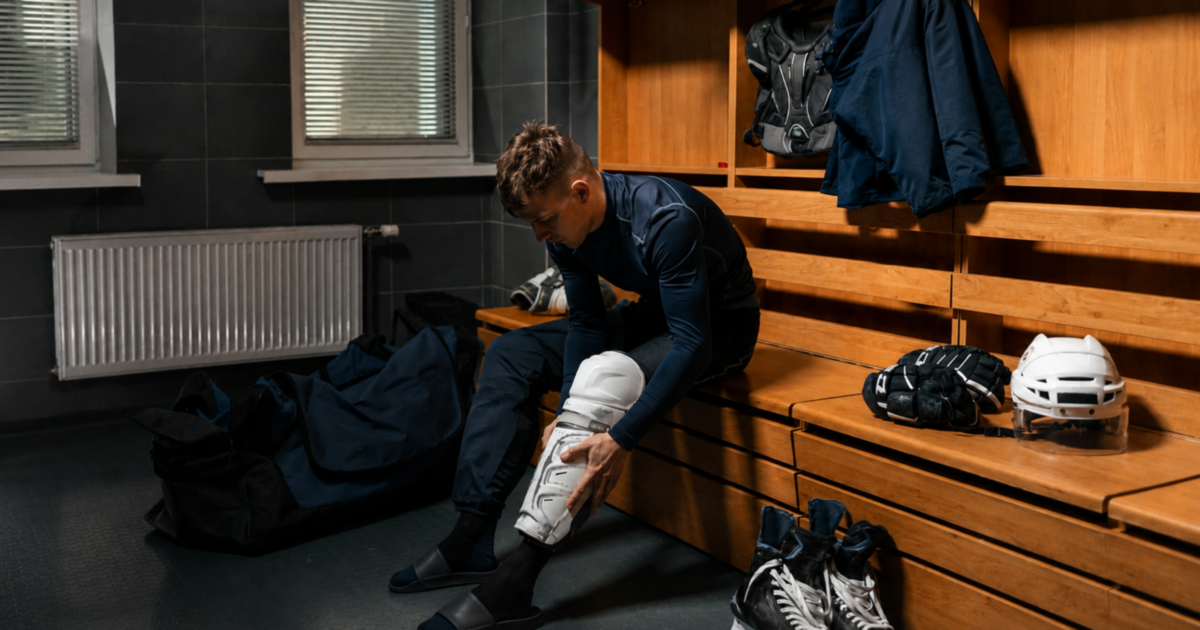
Shin guards should cover the knee and extend down the shin without interfering with the skate tongue. The knee should sit securely inside the central knee pocket when the player bends their leg.
The CCM Next Senior Ice Hockey Shin Guards are designed for senior players and provide an example of the type of protection available. The Bauer Vapor Fly40 Senior Ice Hockey Shin Guards are another option for players comparing different fits.
The shin guard should remain centered when you skate. If it rotates around the leg or constantly slides downward, adjust the straps before considering a different size.
Keeping Shin Guards Secure
Even a well-fitting shin guard can move if it is not secured properly. Some players use tape or dedicated straps to keep the protection in place.
The Blue Sports Shin Guard Straps Senior Shin Straps are an example of an accessory designed to help secure shin guards around the leg. These types of accessories can be useful when the standard fastening system does not provide the level of stability a player prefers.
The important thing is to keep the guard positioned correctly without restricting circulation or creating uncomfortable pressure.
Don’t Forget the Elbows, Wrists, and Neck
A complete equipment setup includes more than the major pieces. Depending on league requirements and personal preference, players may also need a neck guard, athletic protection, base layers, socks, and other protective accessories.
A neck guard is particularly important because it protects an area that is difficult to cover with standard equipment. Some leagues require certified neck protection, so new players should check their local rules before buying.
An athletic protector is also commonly worn underneath hockey pants. It provides additional protection during falls and contact and should fit securely without limiting movement.
Hockey Pants and Lower-Body Protection
Hockey pants protect the hips, thighs, and lower back. They should sit securely around the waist without falling during skating.
When choosing the right hockey pants, comfort, mobility, and protection are essential. The CCM Next Senior Ice Hockey Pants are a practical option for new players, offering reliable protection while allowing freedom of movement on the ice.
Look for enough coverage around the hips and tailbone while making sure the pants do not interfere with the shin guards. The two pieces should work together rather than leaving a large exposed area between them.
For beginners, comfort is especially important. A player who feels restricted by oversized equipment may struggle to learn proper skating technique.
Hockey Socks and Base Layers
Hockey socks cover the shin guards and are normally secured so they do not bunch up around the knees. A properly fitted sock should provide enough room for the shin guard without becoming excessively loose.
A moisture-managing base layer can also make a significant difference. Hockey equipment becomes warm quickly during skating, so clothing that helps manage sweat can make longer practices more comfortable.
How Everything Should Fit Together?
Protective equipment should work as one system. Shoulder pads should overlap appropriately with elbow pads, shin guards should meet the lower edge of the hockey pants, and gloves should allow the wrists to move naturally.
After putting everything on, spend a few minutes moving around before heading onto the ice. Bend your knees, rotate your shoulders, move your arms, and hold a stick. If something constantly shifts or creates pressure, adjust it before the practice begins.
New players do not need to buy every piece at the highest price point. What matters most is having properly fitted equipment that provides the required protection without preventing natural movement. As skating skills improve and players become more comfortable on the ice, they can gradually learn which features and fits suit their individual style.